410 Santa Maria, Irvine, CA 92606
E-mail us: [email protected]
24 Hour Service - 7 Days a Week

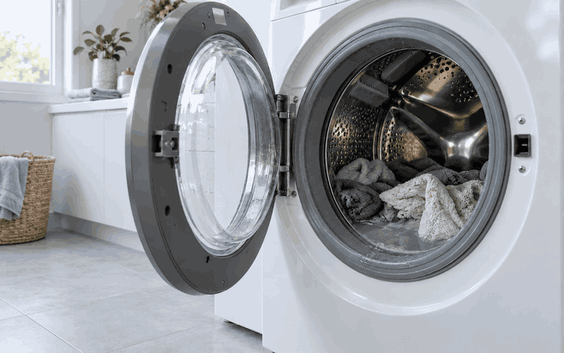
A washing machine that is not draining may have an incorrect cycle setting, unbalanced load, kinked drain hose, blocked filter, clogged drain path, failed pump, door-lock problem, or electronic control fault. Start with external checks and the model instructions before opening any service area.
A washing machine that is not draining may have a clogged pump filter, kinked hose, blocked internal passage, faulty drain pump, incorrect cycle setting, or electronic control problem.
Typical symptoms include standing water inside the drum, unusually wet laundry, humming noises, slow drainage, and a cycle that stops before spinning.
First, determine whether water remains inside or the washer has drained successfully but cannot spin.
For the second situation, read Why Is My Washing Machine Not Spinning?.
If water is leaking near electrical connections, avoid touching wet components. Disconnect power only when safe.
Some washers use programs that intentionally retain water until another operation begins.
Rinse Hold, Soak, or certain specialty settings may affect normal cycle progression.
Confirm that the program has finished and follow manufacturer instructions for the appropriate drain function.
A No Spin option does not necessarily prevent draining.
A crushed, twisted, or restricted drain hose can prevent normal discharge.
Incorrect hose height or excessive insertion into the standpipe may also affect drainage.
A hose installed outside the manufacturer's required height range may cause drainage problems or unintended siphoning, where water leaves during the wrong cycle stage.
Inspect only visible hose sections. Do not move a heavy washer beyond the reach of its water and electrical connections.
Many front-load washers have a filter that collects lint, coins, buttons, and other debris.
A blocked filter can cause standing water, unusual pump sounds, and drainage warnings.
Only clean the filter when the manufacturer's manual provides a safe procedure.
Do not open a pump-filter cap while the washer contains significant water unless the instructions explain how to drain it safely first.
Not every washer has a homeowner-accessible filter.
Small clothing items, accumulated residue, and debris may block internal hoses between the drum and pump.
The washer may drain slowly, retain water, or produce pump noise without normal discharge.
Internal hose removal can release substantial water and may require professional access.
A defective or obstructed drain pump may produce humming, grinding, intermittent drainage, or no expected pumping activity.
However, pump noise alone does not prove that the pump has failed.
A blocked hose, damaged impeller, electrical fault, or controller problem may produce similar symptoms.
A faulty door interlock, pressure sensor, wiring connection, or control board may interrupt the operating sequence.
The machine may stop before draining, remain locked, or display a water-level warning.
These problems require model-specific testing. Never bypass a safety interlock.
Several manufacturers use specific warnings when water cannot leave the drum normally.
LG: OE indicates a drainage problem on supported models. Review LG Error Codes and LG Appliance Repair.
Samsung: 5C, 5E, SE, SC, or nd may indicate abnormal drainage. See Samsung Error Codes and Samsung Appliance Repair.
Whirlpool: F9 E1 indicates a long-drain condition on compatible washers. Consult Whirlpool Error Codes.
Miele: F11 concerns drainage problems. Read Miele Error Codes.
Bosch: E23/F23 indicates AquaStop leak protection on applicable models, not a direct drain-pump failure. See Bosch Error Codes.
Record the exact code, model number, and cycle stage before resetting the washer. A code identifies a detected condition rather than the exact failed component.
Confirm the selected program and any Rinse Hold setting.
Observe whether water remains inside the drum.
Inspect visible drain-hose sections for kinks.
Check for water backing up near the laundry sink or standpipe.
Clean an accessible pump filter only when the manufacturer's safe procedure is available.
Record error codes and unusual pump sounds.
Never force a locked door, tip a water-filled washer, disconnect internal hoses, or open energized panels.
Slow drainage often indicates a partial restriction, weak pumping performance, or external drainage problem.
A washer may still remove some water but take too long to complete the drain stage.
If water backs up around the household standpipe, the building drain may be restricted even when the washing machine pump works normally.
A qualified professional can help distinguish appliance faults from building plumbing problems.
Professional washing machine repair is appropriate when water remains after approved checks, the pump makes abnormal noises, drainage errors repeatedly return, or the machine leaks.
A technician can inspect filters, pumps, hoses, sensors, door locks, wiring, and electronic controls.
Provide the appliance model, warning code, and details about standing water or unusual sounds.
Use only the manufacturer's approved emergency-drain procedure. If none is provided, request professional assistance.
Yes. Excessive suds may interfere with water-level sensing and normal draining, especially in high-efficiency washers.
Commercial equipment may use different drain valves, pumps, controllers, and shared drainage connections. Review Commercial Washer Not Draining for related guidance.
For professional washing machine drainage diagnostics and repair, contact Reliable Hands Appliance.
Phone: +1 (714) 338-9438
Email: [email protected]
Office Hours: Monday through Friday, 7:00 AM to 7:00 PM
Saturday: 9:00 AM to 6:00 PM
Sunday is reserved for emergency calls. Call to confirm availability.
Office: 410 Santa Maria, Irvine, CA 92606
Time Zone: Pacific Time