410 Santa Maria, Irvine, CA 92606
E-mail us: [email protected]
24 Hour Service - 7 Days a Week

Reliable Hands Appliance provides refrigerator repair across Orange County for cooling, defrost, water, ice maker, airflow, electrical, and control problems.
Professional refrigerator repair covers cooling, electrical, airflow, defrost, water, and ice-making problems in residential refrigeration equipment
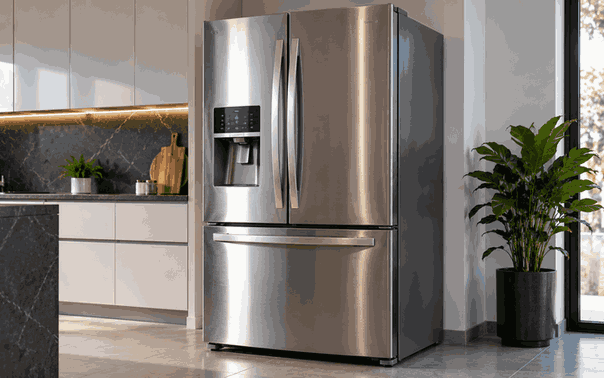
Professional refrigerator repair addresses cooling failures, water leaks, frost accumulation, ice-maker malfunctions, electrical faults, and temperature-control problems in residential refrigerators.
Reliable Hands Appliance provides professional refrigerator diagnostics and repair for conventional and premium residential refrigeration systems throughout Orange County, serving homeowners in Irvine, Costa Mesa, Newport Beach, Santa Ana, and Tustin.
When a refrigerator begins losing cooling capacity, develops a leak, produces unexpected noises, or stops making ice, the symptoms may originate from several interconnected components. Proper diagnosis identifies whether the failure involves airflow, water delivery, temperature sensing, electronic controls, or the refrigeration system.
Same-day appointments may be available depending on the location, technician availability, replacement-part requirements, and time of contact.
Insufficient cooling does not necessarily indicate a defective compressor. Failed fans, obstructed air passages, deteriorated door seals, defrost malfunctions, dirty condenser components, and incorrect sensor readings can produce similar results.
Our refrigerator not cooling troubleshooting guide explains common causes and preliminary checks that may help homeowners recognize when professional diagnosis is necessary.
A refrigerator may continue making operating sounds while the fresh-food compartment remains warmer than expected.
Potential causes include evaporator fan problems, restricted internal airflow, faulty electronic controls, defrost failures, compressor-start issues, and other refrigeration faults.
Diagnosis should examine the complete cooling process before individual parts are replaced.
Thawing food, soft ice cream, excessive frost, and elevated freezer temperatures can indicate inadequate airflow, faulty sensors, damaged gaskets, or problems affecting the cooling system.
Because refrigerator and freezer compartments frequently share cooling components, their temperatures and airflow conditions should be assessed together.
For appliances with a separate freezer-related malfunction, see our Freezer Repair page.
Extended compressor operation may occur when warm air repeatedly enters the cabinet, condenser performance declines, airflow becomes obstructed, or temperature controls fail to respond correctly.
Room temperature, door usage, food loading, and door-gasket condition can also affect runtime.
Continuous operation alone is not sufficient evidence of a failed compressor.
Fresh-food compartments may become excessively cold because of malfunctioning air dampers, inaccurate temperature sensors, obstructed vents, control faults, or placement of items directly in the cold-air path.
Testing helps determine whether the problem comes from temperature regulation, air distribution, or operating conditions.
Refrigerator water and ice systems rely on correctly functioning supply connections, filters, inlet valves, tubing, sensors, temperature controls, and dispensing components.
Water beneath a refrigerator or inside its compartments may be caused by a clogged defrost drain, damaged tubing, loose water connection, faulty inlet valve, ice-maker leak, or filter-housing problem.
Leaks should be investigated promptly because moisture can affect surrounding flooring, cabinetry, and electrical components.
Ice production may stop when freezer temperatures are too high, water pressure is insufficient, the filter becomes restricted, or the inlet valve, ice-maker assembly, or electronic controls malfunction.
A technician may need to evaluate both the cooling system and water-delivery components to determine the actual cause.
Weak or absent water flow may involve a blocked filter, frozen dispenser tubing, inadequate water supply, defective inlet valve, or failed dispenser controls.
Proper testing distinguishes plumbing-related restrictions from internal appliance malfunctions.
Some refrigerator problems initially appear as unusual sounds, intermittent operation, or unresponsive controls rather than obvious temperature loss.
Refrigerators can produce normal clicking, humming, expansion, and ice-dropping sounds during operation.
Persistent grinding, scraping, knocking, or abnormal fan noise may indicate ice contacting a fan blade, a damaged motor, loose components, or other mechanical defects.
Changes in noise accompanied by cooling problems warrant professional inspection.
A refrigerator that does not operate may have an external power issue, damaged wiring, defective start components, failed electronic controls, or another electrical malfunction.
The electrical supply and relevant components should be tested before major equipment is replaced.
Modern refrigerators use sensors and electronic controls to monitor cooling, defrost, fans, ice production, and other functions.
A displayed fault code provides useful diagnostic information but does not automatically identify a defective component.
Homeowners can review available appliance error code guides and provide the exact displayed message when requesting service.
Reliable Hands Appliance works with a broad range of residential refrigeration configurations, including conventional freestanding units and specialized built-in systems.
French-door refrigerators
Side-by-side refrigerators
Top-freezer refrigerators
Bottom-freezer refrigerators
Counter-depth refrigerators
Four-door refrigerators
Multi-door refrigerators
Refrigerators with water dispensers
Refrigerators with automatic ice makers
Refrigerator-freezer combinations
Standalone freezer problems are covered under Freezer Repair.
Professional refrigerator repair is available for many specialized configurations, including:
Built-in refrigerators
Fully integrated refrigerators
Refrigerator columns
Freezer columns
Panel-ready refrigerators
Undercounter refrigerators
Refrigerator drawers
Freezer drawers
Premium French-door refrigerators
Premium side-by-side refrigeration systems
Wine and specialty refrigeration systems
Premium refrigeration equipment may contain unique ventilation arrangements, electronic controls, access requirements, and installation configurations.
For built-in and integrated appliances, provide the full model details and describe any cabinetry restrictions before the appointment.
Do not attempt to move heavy refrigeration equipment or remove decorative panels unless specifically instructed.
Refrigerator diagnosis involves evaluating operating temperatures, airflow, frost formation, door sealing, water connections, mechanical sounds, and electrical controls.
Depending on the equipment and reported symptoms, technicians may inspect:
Evaporator fan
Condenser fan
Compressor and start components
Thermostats
Thermistors
Temperature sensors
Defrost heater
Defrost timer and controls
Electronic control boards
User interface
Air dampers
Internal vents
Water inlet valves
Water supply connections
Ice-maker assembly
Dispenser assembly
Door switches
Door hinges
Door gaskets
Drain tubes
Condensate system
A refrigerator that fails to maintain temperature does not necessarily need refrigerant.
Airflow restrictions, failed sensors, defrost faults, and electrical problems can create cooling symptoms similar to those associated with sealed-system failures.
Refrigerant-related work requires appropriate professional testing and procedures.
Reliable Hands Appliance provides residential refrigerator repair for many major manufacturers, including Samsung, GE, LG, KitchenAid, Whirlpool, Maytag, Kenmore, Sub-Zero, Viking, Thermador, Miele, Bosch, Frigidaire, Fisher & Paykel, Bertazzoni, and GE Monogram.
Repair availability depends on model specifications, appliance condition, technical documentation, access requirements, and compatible replacement parts.
Provide the complete model number, manufacturer name, and a concise description of the malfunction to confirm service availability.
Professional refrigerator repair begins with gathering details about the appliance, the observed problem, and any urgent conditions affecting its operation.
When requesting service, provide the refrigerator brand, model number, address, and any displayed error codes.
Mention whether the failure affects the freezer, fresh-food compartment, ice maker, dispenser, or several functions.
Report active water leaks, unusual electrical odors, or complete cooling loss.
During the appointment, the technician checks relevant equipment components and evaluates the symptoms.
Once the underlying fault has been identified, the findings and recommended repair procedures can be discussed.
Different failures may require different diagnostic methods and replacement components, even when the visible symptoms appear similar.
When compatible parts are available and the required work can be completed during the appointment, the technician performs the approved repair and checks the affected functions.
Specialized components may need to be ordered before repair can be completed.
Warranty coverage varies according to the work performed and installed components. The team can clarify applicable terms before authorization.
Repair can be worthwhile when the refrigerator remains structurally sound, the problem involves a repairable component, and compatible parts are available.
Replacement may be more appropriate when serious structural damage, multiple major failures, repeated cooling problems, or unavailable components prevent dependable operation.
Premium refrigerator replacement can introduce additional installation considerations, including:
Cabinet dimensions
Decorative panel compatibility
Ventilation requirements
Installation requirements
Appliance dimensions
Matching adjacent refrigeration equipment
These factors should be evaluated alongside the refrigerator's condition and diagnostic findings.
An appliance's age alone should not determine whether repair or replacement is the better option.
Reliable Hands Appliance provides residential refrigerator repair across Orange County, including Irvine, Costa Mesa, Newport Beach, Santa Ana, and Tustin.
City-specific appliance repair pages provide additional information about available services and local appointment coverage.
Some refrigerator problems can be resolved during the initial visit when the technician identifies the failure and the necessary replacement components are available.
Other repairs require specialized parts or additional appointments.
Yes. Many built-in, integrated, panel-ready, column, and premium refrigeration systems can be diagnosed and repaired.
Provide the full model number and information about the installation to confirm availability.
Yes. Diagnosis may cover water inlet valves, ice-making assemblies, filters, dispensing controls, tubing, sensors, and related cooling problems.
Potential causes include defective fans, excessive frost, airflow restrictions, inaccurate sensors, damaged gaskets, electronic control problems, or refrigeration-system defects.
Professional testing is necessary to identify the actual source of the failure.
If water has reached electrical components, avoid touching affected areas and disconnect the appliance only when this can be done safely.
Shut off the accessible refrigerator water supply where appropriate and request professional repair.
Provide the service address, refrigerator manufacturer, complete model number, relevant error messages, the approximate time the problem began, and a description of the symptoms.
For professional refrigerator diagnostics and repair, contact Reliable Hands Appliance.
Reliable Hands Appliance
Office: 410 Santa Maria, Irvine, CA 92606
Phone: +1 (714) 338-9438
Email: [email protected]
Hours: Monday-Friday, 7:00 AM-7:00 PM; Saturday, 9:00 AM-6:00 PM
Sunday: Emergency calls only; call to confirm availability
Time Zone: Pacific Time