410 Santa Maria, Irvine, CA 92606
E-mail us: [email protected]
24 Hour Service - 7 Days a Week

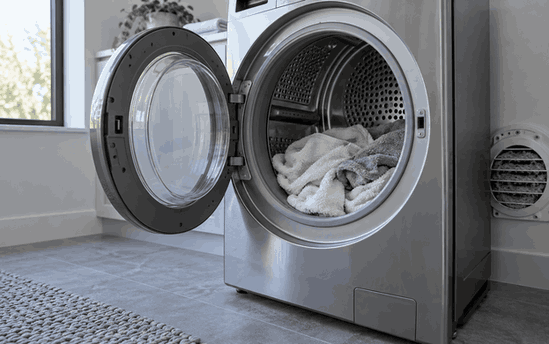
A dryer that runs but does not heat may have an incorrect cycle setting, restricted exhaust airflow, a partial power-supply problem, failed thermal protection, a defective heating element, gas ignition trouble, a sensor issue, or an electronic control fault.
A dryer that runs but does not heat may have an incorrect cycle setting, restricted airflow, electrical supply problem, damaged heating element, failed thermal protection, gas ignition fault, or electronic control malfunction.
When the drum tumbles but clothes remain damp, determine whether the dryer produces no heat at all or simply takes too long to dry laundry.
Stop using a dryer that overheats, produces a burning odor, repeatedly trips a breaker, or has severely restricted exhaust airflow. If you smell gas, leave the affected area and contact the gas utility or emergency services.
Some programs, including Air Fluff, Air Only, and Cool Air, operate without heat.
Certain delicate cycles also use reduced temperatures.
Check the selected program before assuming that a heating component has failed.
A blocked lint screen or restricted exhaust vent prevents a vented dryer from removing warm, moisture-laden air efficiently.
Possible causes include:
Lint accumulation
Crushed or kinked exhaust ducts
Obstructed exterior vent openings
Damaged exhaust connections
Restricted airflow may increase drying times, cause overheating, or activate protective devices.
Clean the user-accessible lint screen and inspect visible vent sections.
Do not operate a dryer with severely restricted exhaust airflow. Excessive lint and overheating can create a fire hazard.
Many electric dryers require a complete high-voltage electrical supply for heating.
The drum motor may continue operating even when the heating circuit has lost part of its required power.
This means the dryer can tumble normally while producing no heat.
A tripped breaker, damaged connection, or internal electrical fault may be responsible.
Do not test energized connections or repeatedly reset a tripping breaker.
A defective heating element can prevent an electric dryer from generating heat.
However, an open thermal fuse, high-limit thermostat, damaged wiring, or failed relay may produce similar symptoms.
Thermal protection can activate because of overheating or restricted airflow.
A technician should determine why a protective device opened before replacing it.
Never bypass thermal protection to restore heating.
A gas dryer that tumbles without heat may have a failed igniter, flame sensor, gas-valve coil, or another burner-system fault.
The appliance may attempt ignition without establishing a stable flame.
Gas components and safety devices require professional testing.
Automatic dryers use moisture sensors and temperature controls to manage drying cycles.
Dirty or defective sensors may cause premature shutdowns, while damaged thermistors, relays, or electronic boards can interrupt normal heating.
Clean only user-accessible sensors according to manufacturer instructions.
Condenser and heat-pump dryers do not use the same exterior exhaust arrangement as conventional vented models.
Reduced performance may involve dirty filters, blocked heat exchangers, condensate drainage faults, or refrigeration-system problems.
Follow model-specific maintenance instructions.
Many modern dryers display diagnostic warnings. The exact meaning depends on the manufacturer and model.
LG: d75, d80, d90, and d95 indicate varying levels of exhaust restriction on compatible models. See the LG Appliance Error Codes Guide.
Samsung: HC/hE concerns heating or overheating, tC/tE relates to temperature sensing, and C80/C90 may indicate vent restriction during supported tests. Review Samsung Error Codes.
Whirlpool: AF/F4E3 may indicate restricted dryer airflow. See Whirlpool Error Codes.
Bosch: Certain models use E01/E02 for lint-filter warnings and E63 for heating-related faults. Review Bosch Error Codes.
Miele: F55 may indicate excessive drying time, while F66 can involve filter or airflow conditions on supported models. See Miele Error Codes.
Record the complete code and model number before resetting the dryer. A warning does not automatically identify the failed component.
Before requesting professional assistance:
Select an appropriate heated cycle.
Clean the accessible lint screen.
Check visible exhaust ducting for restrictions on vented models.
Inspect the exterior vent only when safely accessible.
Reduce an overloaded laundry load.
Record error codes and unusual operating symptoms.
Check the breaker once only when permitted and safe.
Never bypass safety devices, open energized panels, disconnect gas fittings, or operate a dryer with disconnected exhaust ducting as a troubleshooting method.
A dryer producing no heat may have an electrical, ignition, heating-element, or control problem.
A dryer that still heats but requires multiple cycles may have restricted airflow, excessive loading, dirty filters, intermittent heating, or moisture-sensor problems.
Clothes entering the dryer unusually wet can also extend drying time.
If your washer is not removing enough water, read Why Is My Washing Machine Not Spinning?.
Professional dryer repair is appropriate when:
The drum tumbles but produces no heat
Drying cycles remain unusually long
Heating-related error codes return
The appliance overheats
Gas ignition fails
Abnormal electrical or mechanical noises develop
A technician can test heating components, airflow, gas ignition, temperature sensors, wiring, and electronic controls.
For laundromats or hospitality facilities, the related article Commercial Dryer Not Heating covers equipment-specific concerns.
Yes. Severe exhaust restrictions can cause overheating and activate protective devices, interrupting heating on some models.
The drum motor may still operate when the heating circuit lacks its required electrical supply. Heating elements and controls may also be defective.
Yes. Dirty filters, heat exchangers, sensors, condensate systems, or refrigeration components can affect drying performance.
For professional dryer heating diagnostics and repair, contact Reliable Hands Appliance.
Phone: +1 (714) 338-9438
Email: [email protected]
Office Hours: Monday through Friday, 7:00 AM to 7:00 PM
Saturday: 9:00 AM to 6:00 PM
Sunday is reserved for emergency calls. Call to confirm availability.
Office: 410 Santa Maria, Irvine, CA 92606
Time Zone: Pacific Time