410 Santa Maria, Irvine, CA 92606
E-mail us: [email protected]
24 Hour Service - 7 Days a Week

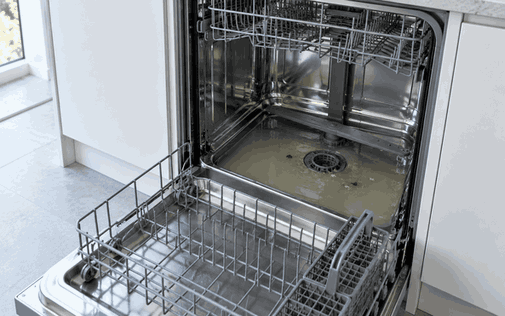
A dishwasher that is not draining may have a dirty filter, blocked sump, kinked drain hose, clogged air gap, garbage-disposal connection problem, failed drain pump, check-valve issue, or electronic control fault
A dishwasher that is not draining may have a clogged filter, blocked sump, restricted drain hose, obstructed air gap, garbage disposal connection problem, faulty pump, or electronic control malfunction.
First, determine whether the dishwasher failed to drain during its cycle or whether water returned after the machine had already emptied.
A small amount of clean water in the lowest sump area may be normal on certain models. However, standing water covering the tub floor can indicate a problem.
Food particles, grease, labels, and broken glass can accumulate around the filter and sump, restricting normal water movement.
Clean only user-accessible components according to the manufacturer's instructions.
Be careful with cloudy water because sharp glass fragments may be hidden near the filter.
Do not remove internal pump covers or reach into unfamiliar drainage assemblies.
Opening the door, interrupting power, or changing settings may stop a program before its final drainage stage.
Check whether the wash cycle has finished.
If available, use the manufacturer's approved Cancel/Drain function to determine whether the appliance can remove the remaining water.
A damaged or restricted drain hose can prevent wastewater from leaving the dishwasher.
Restrictions may occur beneath the sink, behind the appliance, or near the garbage disposal connection.
Some installations require an approved air gap, high loop, or other backflow-prevention arrangement according to the manufacturer and applicable requirements.
Incorrect routing may allow wastewater to return.
Do not change concealed hose connections without confirming the proper installation requirements.
A clogged sink air gap can restrict discharge and sometimes cause water to escape near the fitting.
The garbage disposal connection may also become blocked.
A common problem after installing a new disposal is an unopened dishwasher-inlet knockout plug.
If drainage stopped immediately after disposal replacement, this connection deserves attention.
Never place your hand inside a connected garbage disposal or bypass a required air gap.
The drain pump removes wastewater during the appropriate cycle stage.
A restricted impeller, damaged motor, wiring fault, or obstructed discharge path may prevent normal operation.
Possible symptoms include humming, grinding, rattling, or no expected pump activity.
Pump noise alone does not confirm whether the pump is defective.
Some dishwashers contain a check valve that helps prevent water from returning after drainage.
A damaged valve or internal hose may affect normal discharge.
A defective door latch, water sensor, wiring connection, or electronic control can also interrupt the program before draining.
These components may require professional diagnosis.
Modern dishwashers may display drain, pump, or leak-protection warnings.
Relevant examples on compatible models include:
Bosch: E24 indicates drainage trouble, while E15 concerns leak protection. See Bosch Error Codes and Bosch Appliance Repair.
LG: OE indicates abnormal drainage; AE/E1 may involve leak protection. Review LG Error Codes.
Samsung: 5C, 5E, SC, or SE may indicate drainage problems, while LC/LE concerns leakage. See Samsung Error Codes.
Whirlpool: F9E1 indicates a long-drain condition; F8E4 may indicate water detected in the drip tray. Read Whirlpool Error Codes.
Miele: F11 concerns drainage, while F78 relates to circulation-pump operation on supported models. See Miele Error Codes and Miele Appliance Repair.
Viking: Certain 451 Series models use 1/5 flashing for a drain error and 3/3 for a drain-pump error. Consult Viking Error Codes.
Code meanings vary by model. Record the complete warning before resetting the dishwasher.
Before requesting repair:
Confirm that the cycle has finished.
Use the approved Cancel/Drain function when available.
Inspect and clean the accessible filter.
Check visible drain-hose sections for restrictions.
Inspect the sink air gap when user-accessible.
Check for garbage disposal or sink-drain problems.
Record unusual pump noises, leaks, and error codes.
Do not use chemical drain cleaner inside the dishwasher, disconnect concealed plumbing, or open energized electrical panels.
Water returning after a completed drain cycle may indicate backflow rather than pump failure.
Possible causes include a blocked air gap, restricted sink drain, incorrectly arranged drain hose, or faulty check valve.
If dirty water repeatedly returns, stop using the appliance until the drainage arrangement is evaluated.
Professional dishwasher repair is appropriate when standing water remains after approved checks, error codes recur, the pump produces abnormal sounds, or water leaks beneath the appliance.
A technician can inspect drainage components, hoses, pumps, check valves, sensors, wiring, and electronic controls.
Provide the dishwasher brand, model, warning code, and information about recent plumbing or garbage disposal changes.
A small amount in the lowest sump may be normal, but visible standing water across the tub floor requires attention.
Yes. An obstructed connection or unopened inlet knockout plug can prevent normal water discharge.
Yes. Commercial equipment may use different pumps, valves, standpipes, and sanitation procedures. Read Commercial Dishwasher Not Draining for equipment-specific guidance.
For professional dishwasher drainage diagnostics and repair, contact Reliable Hands Appliance.
Phone: +1 (714) 338-9438
Email: [email protected]
Office Hours: Monday through Friday, 7:00 AM to 7:00 PM
Saturday: 9:00 AM to 6:00 PM
Sunday is reserved for emergency calls. Call to confirm availability.
Office: 410 Santa Maria, Irvine, CA 92606
Time Zone: Pacific Time